The client.
151-155 St Vincent Street is a modern shared office space designed to support flexible working, with high-quality amenities that enhance the day-to-day experience for occupiers. As part of the building’s end-of-trip facilities, the client wanted to create practical, secure storage for cyclists and commuters while maintaining a strong focus on sustainability and thoughtful design.
Working alongside Form Design Consultants Ltd and contractor AKP, the project aimed to deliver a storage solution that was both functional and visually integrated with the surrounding welfare facilities.
The project.
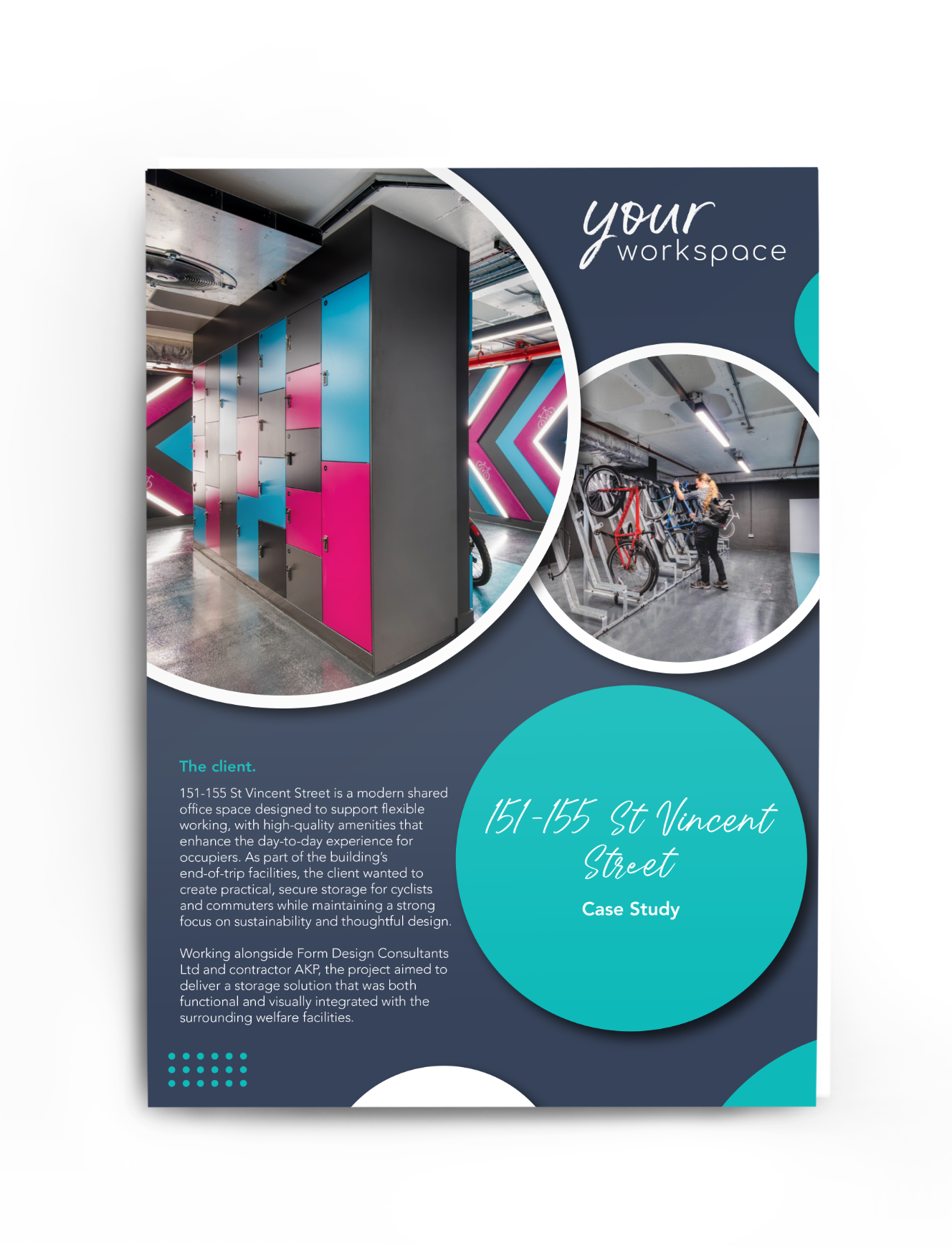
Your Workspace installed 32 personal lockers within the new Cycle and Welfare Facilities, providing secure storage for clothing, bags and other personal belongings used throughout the working day. The lockers were fitted with Digilock Mech™ locks, offering a simple, reliable and user-friendly solution without the need for keys or power.
A standout feature of the project was its sustainable approach to materials. The locker door colours were carefully selected to complement wall cladding created from rubber flooring left behind by a previous tenant fit out. Rather than disposing of the existing flooring, it was repurposed as a wall finish, reducing waste while creating a distinctive design feature that tied the entire space together.
The result is a practical storage area that supports active travel while demonstrating how considered design and material reuse can work hand in hand.
The results.
The completed locker installation has transformed the basement welfare facilities into a secure, organised and welcoming space for building users. Employees and visitors now have convenient storage for personal belongings, making cycling and active commuting a more attractive option while improving the overall user experience.
By combining durable mechanical locking with a design that embraces the reuse of existing materials, the project successfully balances functionality, aesthetics and sustainability. The repurposed wall cladding not only reduced environmental impact but also gave the space a unique identity, demonstrating how small design decisions can make a meaningful contribution to a more sustainable workplace.