The way we work has changed significantly. For many organisations, the traditional office model of fixed desks, assigned seating and five-day attendance is no longer the default. Instead, businesses are creating more flexible environments that support a mixture of focused work, collaboration, social interaction and remote working.
But introducing flexible working is about more than simply reducing the number of desks. To make a hybrid workplace successful, organisations need a considered workplace strategy that connects people, space, technology and business objectives.
So, what does an effective workplace strategy look like, and how can businesses create an office that genuinely supports the way their people work?
What is a Workplace Strategy?
A workplace strategy is a plan for how an organisation’s physical workspace should support its people and wider business objectives.
It considers everything from how much space is required and where people work, to how teams collaborate, how technology is used and what employees need from the office.
For hybrid organisations, this becomes particularly important. If employees are only in the office for part of the week, simply replicating a traditional office layout may mean valuable space is being underused.
A successful workplace strategy instead starts with understanding how people actually use the workspace.
This could include analysing office attendance, understanding different working patterns, gathering employee feedback and identifying which activities employees are most likely to undertake when they are in the office.
Why Flexible Working Requires a Different Approach
Flexible working has changed the purpose of the workplace.
Previously, an employee might have had an assigned desk because they were expected to spend most of their working week there. In a hybrid environment, that same desk could sit empty for several days.
At the same time, employees may be coming into the office specifically to collaborate, meet colleagues, attend meetings or connect with their wider team.
This creates an opportunity to rethink the workplace.
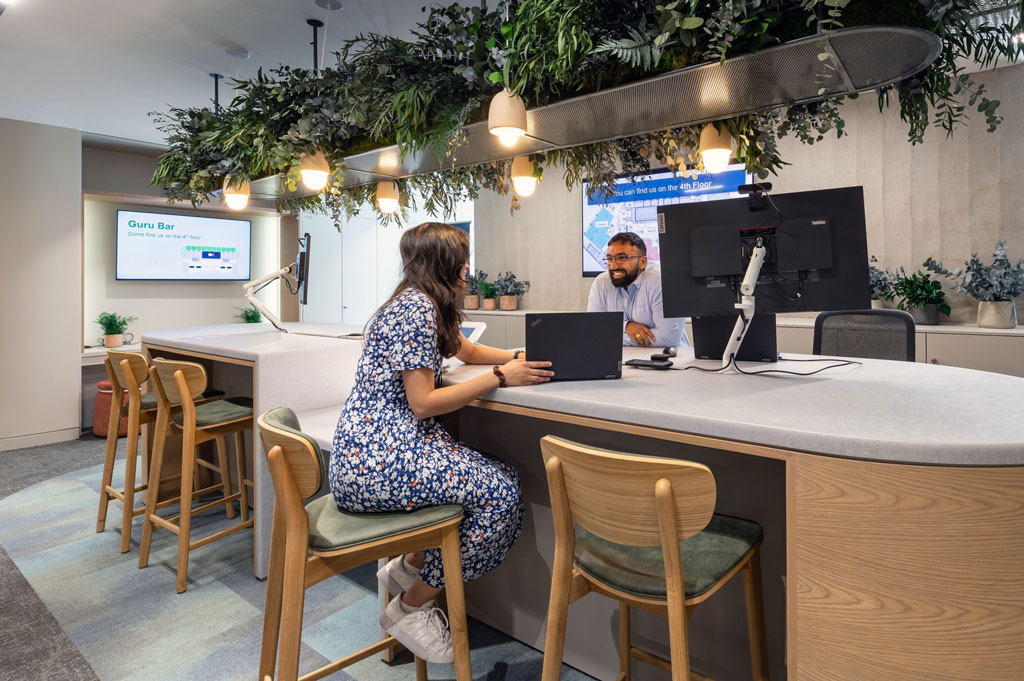
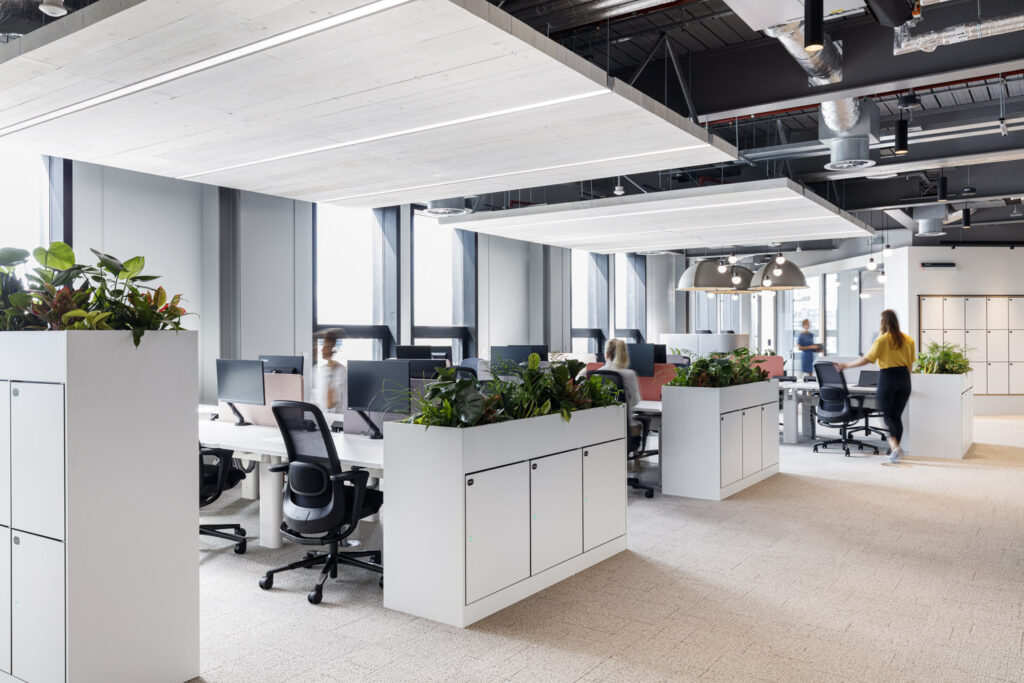
Rather than designing an office around individual desks, organisations can create a variety of spaces designed around different activities. These might include:
- Collaborative areas for teamwork and brainstorming
- Quiet zones for focused work
- Meeting rooms and acoustic work pods
- Informal areas for conversations and social interaction
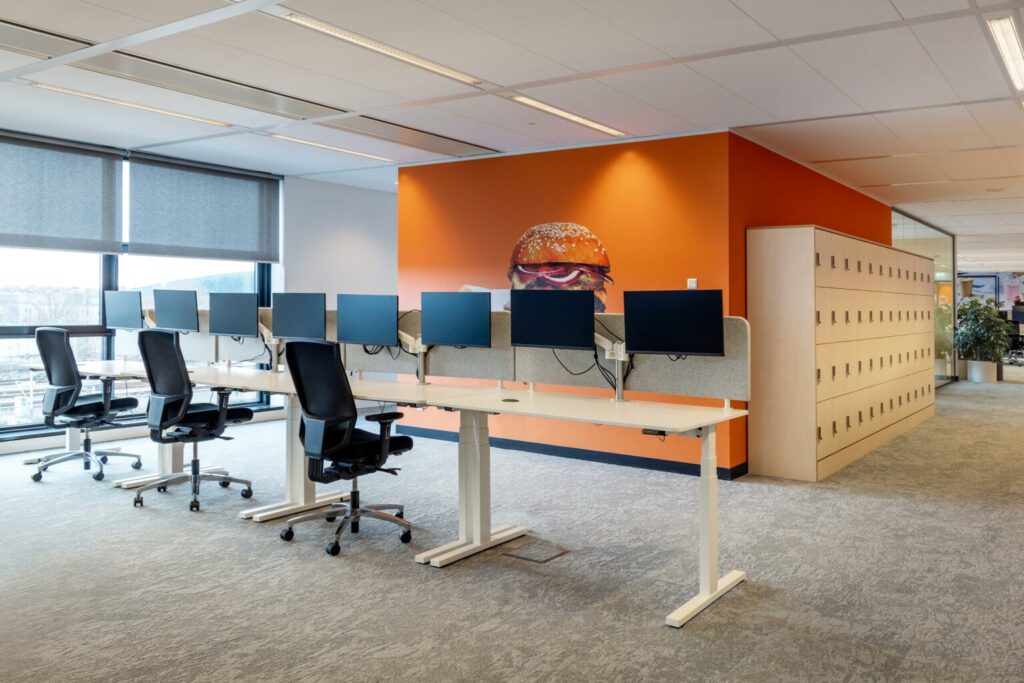
- Flexible workstations
- Breakout and wellbeing spaces
- Secure storage for employees who do not have a permanent desk
The result is a workplace that can adapt throughout the day, rather than being designed around one fixed way of working.
Start With People, Not Property
One of the most important principles of an effective workplace strategy is to start with employee needs.
Technology and property data can tell you how many people are using the office, but employee feedback can help explain why they are using it.
For example, employees may prefer coming into the office when they know their colleagues will also be there. They may value access to meeting spaces that are difficult to recreate at home, or they may need quiet areas for focused work.
Understanding these behaviours can help workplace professionals make more informed decisions about space.
Employee surveys, workshops, occupancy data and feedback from facilities and HR teams can all contribute to a more complete picture.
The goal isn’t necessarily to create a workplace that suits every individual preference. Instead, it is to provide enough choice and flexibility to support different working styles.
Design for Activity Rather Than Attendance
A common mistake when planning a hybrid workplace is focusing solely on occupancy.
Knowing that 60% of employees are in the office on a particular day doesn’t necessarily tell you how they are using the space.
For example, 60% occupancy could mean that employees are sitting quietly at individual desks all day. Alternatively, it could mean that most employees are moving between meetings, collaborative spaces, breakout areas and individual workstations.
These scenarios require very different workplace designs.
This is why activity-based working can be an important part of a flexible workplace strategy. Instead of giving employees a single space, the workplace provides a range of environments that allow people to choose where they work based on the task at hand.
Don’t Overlook Storage
One of the practical challenges of flexible working is personal storage.
When employees no longer have an assigned desk, they still need somewhere secure to store personal belongings, work equipment and other items.
Smart lockers can provide a flexible alternative to traditional fixed storage. Employees can access lockers using technologies such as mobile credentials, RFID or digital wallets, while workplace teams can manage locker usage centrally.
This can also help organisations make better use of available floor space.
Instead of providing permanent storage for every employee, businesses can introduce shared locker systems that reflect actual office attendance and usage.
For hybrid workplaces, this can be particularly useful because storage can become part of the wider flexible workspace rather than being tied to a specific desk.
Technology Should Support the Strategy
Technology is another important component of a modern workplace strategy.
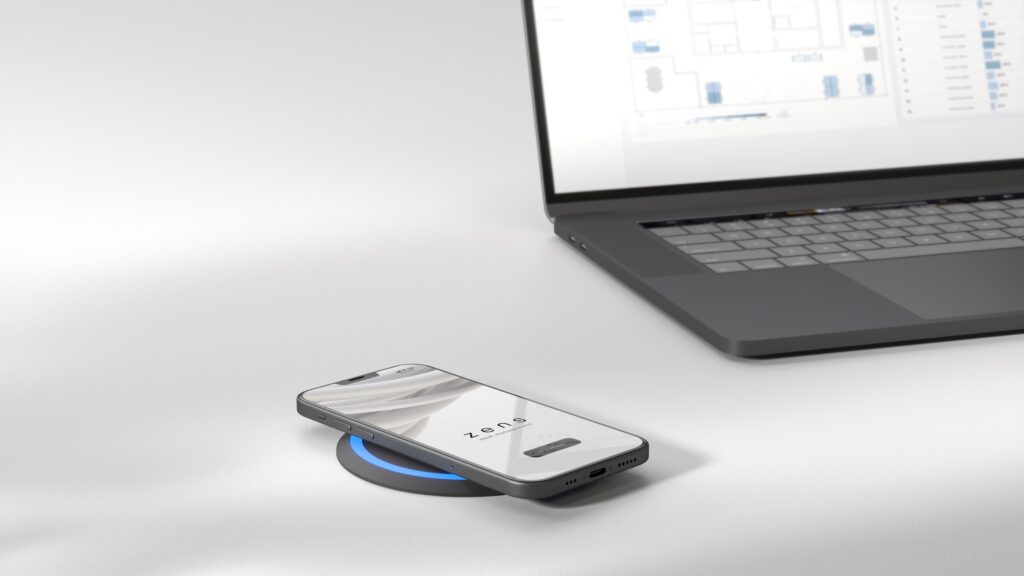
Desk booking, room booking, occupancy monitoring and smart locker systems can all help organisations understand and manage how their workplace is being used.
However, technology should support the workplace strategy rather than define it.
For example, introducing a desk booking system won’t automatically create a successful hybrid workplace. Employees also need clear guidance around how and when to use the system, while workplace teams need to understand the data it produces.
The best approach is to identify the workplace challenge first and then determine which technology can help solve it.
Create a Workplace People Want to Use
Hybrid working has also changed expectations around the office.
If employees can work from home, the workplace needs to provide a clear reason to come in.
This doesn’t necessarily mean creating a more elaborate office. It means designing spaces around the activities and experiences that benefit from being together.
Collaborative environments, comfortable social spaces, high-quality meeting facilities, quiet areas and wellbeing-focused spaces can all contribute to a workplace that feels purposeful.
The office becomes more than somewhere to sit at a desk. It becomes a destination for connection, collaboration and culture.
A Workplace Strategy Should Evolve
There is no single formula for creating the perfect hybrid workplace.
Working patterns continue to change, teams grow and business priorities evolve. This means workplace strategy shouldn’t be treated as a one-off project.
Regularly reviewing occupancy data, employee feedback and space utilisation can help organisations understand what is working and where improvements may be needed.
Small changes can sometimes make a significant difference. Moving storage, introducing additional collaboration areas or repurposing underused space may be more effective than a complete office redesign.
The key is to keep the workplace aligned with the organisation and its people.
The Future of Flexible Workplaces
Flexible and hybrid working have created an opportunity for businesses to rethink what their workplaces are designed to achieve.
An effective workplace strategy brings together people, space and technology to create an environment that can adapt to changing needs.
Rather than asking, “How many desks do we need?”, workplace professionals can ask more useful questions:
“How do our people work? What activities bring them into the office? What spaces do they need? And how can our workplace make those activities easier?”
By answering these questions, organisations can create workplaces that are not only more efficient, but also more engaging, adaptable and aligned with the needs of their people.
Contact Us
At Your Workspace, we provide workplace solutions designed to support modern, flexible environments – from smart storage and workplace technology to work pods and adaptable furniture.
Get in touch with our workplace consultants on 01621 855053 or email info@yourworkspace.com to discuss how you can create a workplace that works harder for your people.