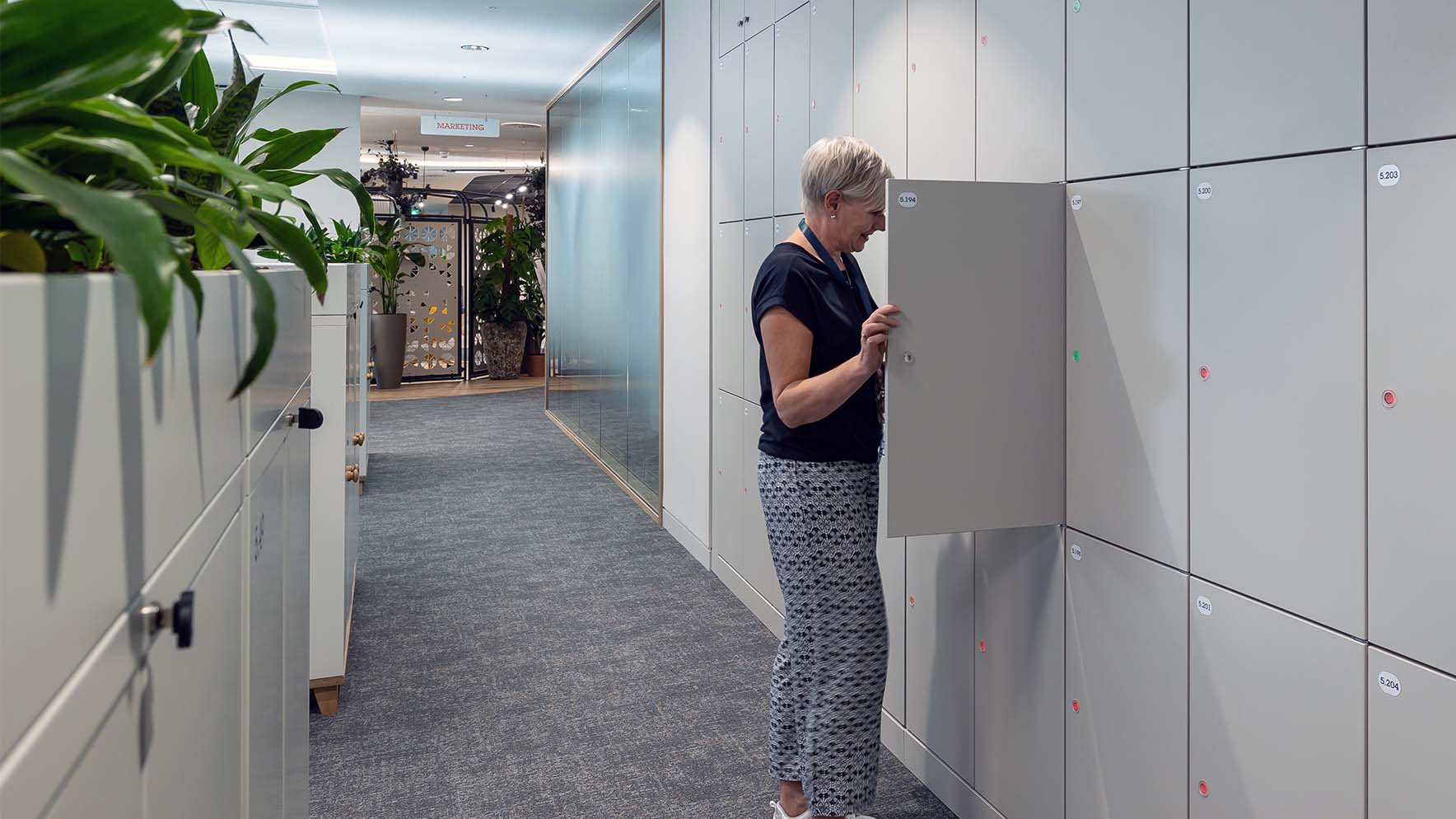
Most offices that switch to smart lockers do so after the same quiet realisation: the reception desk has become an unofficial post room, personal belongings are scattered across shared spaces, and facilities teams are spending hours each week on locker allocation spreadsheets that nobody trusts. The shift to hybrid working made it worse, but the problem existed before anyone had heard the word ‘hot-desking’.
What Should a Smart Locker Replace in Your Office?
Before comparing vendors, it helps to identify what you are replacing. In most UK offices, the answer is some combination of:
Personal Storage That Relies on Physical Keys
Keys get lost, locks get jammed, and someone on the facilities team ends up cutting replacements or maintaining a master key register. The ongoing cost is rarely tracked, but it adds up across buildings and years.
Informal Parcel Handling
Parcels arrive throughout the day from multiple carriers. They sit behind reception, on desks or in cupboards until someone remembers to tell the recipient. There is no audit trail, no notification and no accountability if something goes missing.
Equipment Handovers That Depend on a Person Being Available
Shared laptops, AV kit or project materials move between teams, but the process relies on someone physically being present at the right time.
A smart locker system handles all three through a single bank of connected compartments managed by software. The lockers themselves are the visible part; the management platform underneath is what makes them useful rather than decorative.
How Do Access Methods Affect Day-to-Day Adoption?
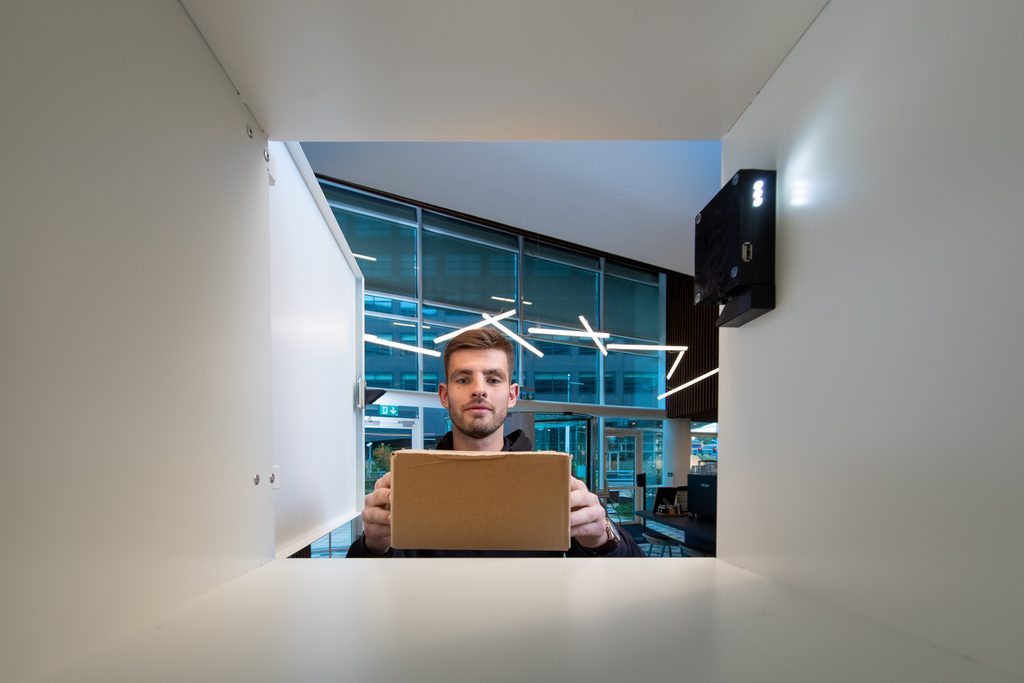
Access is the single most important factor in whether your team actually uses the lockers. The principle is simple: people should be able to open their locker using something they already carry with them.
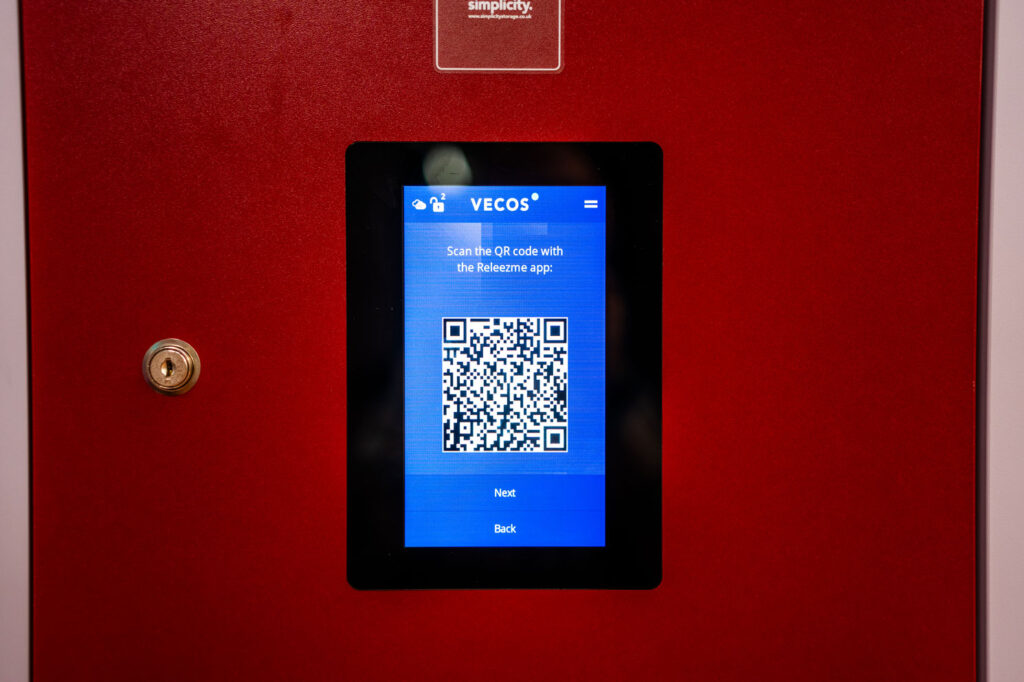
The most common access methods for UK office smart lockers are building access cards (RFID or NFC), mobile apps, digital wallet credentials (Apple Wallet or Google Wallet), PIN codes for visitors and temporary staff, and touchscreen kiosks at the locker bank itself.
Your Workspace’s Simplicity smart lockers support all of these, including direct RFID access at the door on the Simplicity V3+ model. LED indicators on each door show availability at a glance, so there is no guessing which compartments are free.
The access method matters because it determines onboarding friction. If your employees already tap a card to enter the building, using that same card to open their locker removes one more thing to remember. If a separate fob, key or proprietary token is required, adoption drops. The fewer new credentials you introduce, the faster the system becomes invisible in daily routines. That frictionless access is what turns a locker bank from something that sits unused into part of the daily workflow.
What Separates Personal Storage from Parcel Management, and Can One System Do Both?
These are two distinct workflows that often get conflated during procurement. Personal storage is ongoing, often on a daily or weekly basis: an employee taps their card, stores a bag and laptop, and retrieves them at the end of the day. Parcel management is event-driven: a delivery arrives, a notification goes to the recipient, and they collect it when convenient.
A well-designed platform runs both behaviours on the same physical hardware. The same bank of smart lockers can include compartments configured for hot-desking personal storage alongside compartments reserved for inbound parcels. Software determines which locker does what, and that configuration can change without a site visit.
For parcel management specifically, look for automated carrier notifications, recipient alerts (email, app push or SMS), timed collection windows with escalation if an item is not picked up, and a full audit trail of every deposit and retrieval. Your Workspace’s postal lockers handle this with configurable collection periods, postmaster badge access for mailroom staff, and automatic release of compartments once items are collected.
How Much Flexibility Does the Management Software Need?
More than most buyers initially expect. The physical lockers are a commodity, and good ones look similar across vendors. The software is where the real differences emerge.
At minimum, you need the ability to run multiple locker behaviours simultaneously: assigned lockers for permanent staff, hot lockers that release back into the pool at the end of the day, team lockers shared among a project group, visitor lockers with temporary PINs, and parcel lockers with carrier drop-off access.
Beyond that, look for web-based management that works from any device without installing local software, real-time analytics showing occupancy rates and usage patterns by time of day, remote lock control for facilities teams who manage multiple floors or buildings, automated user provisioning tied to your HR or identity system so that starters and leavers are handled without manual intervention, and configurable business rules such as one-locker-per-person limits or time-based auto-release.
Your Workspace’s platform provides centralised management across global sites from a single dashboard, with historical and real-time reporting that shows not just how often lockers are used, but also when, by whom and in which configurations. That data feeds directly into space-planning decisions, helping you right-size your locker estate over time rather than guessing at ratios.
What Security and Compliance Standards Matter for UK Offices?
For UK facilities leaders, three areas deserve scrutiny.
Data Protection Compliance
The system processes personal data, including who opened which locker, when and using which credential. It needs to comply with UK GDPR, with clear documentation on data storage location, retention periods and access controls. Ask where the data is hosted and whether an on-premises deployment option exists for organisations with strict data residency requirements.
Information Security Certification
ISO 27001 certification confirms that the vendor maintains an audited information security management system. This is not a nice-to-have; it is increasingly a procurement requirement for enterprise UK organisations.
Physical Security of the Lockers Themselves
Look for encryption of data in transit and at rest, tamper detection on hardware, and comprehensive audit logs of every access event. For sensitive environments (legal, financial services and healthcare), the ability to restrict locker access by user group and generate compliance reports on demand is essential.
Should You Choose Wired or Wireless Locks, and Does It Matter?
It matters, but neither option is universally better. The choice depends on your building and how likely you are to reconfigure the space.
Wired locks run power and data through the locker joinery to each door. They offer consistent connectivity with no battery changes, and they can support in-locker device charging (USB or wireless). They require more coordination with joinery suppliers during installation, but for permanent, high-traffic banks, they are the most reliable long-term option.
Wireless locks are battery-powered and require no cabling through the cabinetry. They install faster, are easy to reconfigure and work well for retrofits onto existing furniture or freestanding banks that may move. Battery life on modern wireless locks extends to several years of normal use, but replacement scheduling still needs managing.
Your Workspace offers both options across its Simplicity range, so you can specify wired banks in permanent locations and wireless locks where flexibility or retrofit requirements make more sense. Mixing both on the same floor, managed through the same software, avoids locking yourself into a single approach.
How Do You Calculate Whether Smart Lockers Actually Save Space and Money?
The business case rests on three measurable outcomes.
Space Reduction
Shared smart lockers operate at lower ratios than assigned lockers because not everyone is in the office every day. Organisations running a hybrid model commonly achieve ratios of one locker per 1.5 to 2.5 employees, compared to one-to-one with traditional assigned storage. That reduction can free up 20–30% of the floor space previously dedicated to locker banks.
Time Savings
Facilities teams typically recover hundreds of hours per year for every 100 lockers, time that would otherwise be spent on key management, allocation spreadsheets, manually offboarding leavers and utilisation audits. With automated provisioning and real-time dashboards, most of that administrative overhead disappears.
Employee Experience
Staff get secure storage on demand using credentials they already carry, with no physical tokens to misplace and no need to find a specific person to gain access. In hybrid offices where people are choosing whether to come in, removing daily friction matters more than it did when attendance was compulsory.
Total Cost
The total cost of ownership should factor in hardware, software subscriptions, joinery, installation, integrations and ongoing support. Because the shared model reduces the number of lockers needed, a smart system often costs less overall than replacing like-for-like with traditional storage, even before counting the time and space savings.
Contact Us
Smart lockers are infrastructure, not furniture. They need to adapt as your office changes, scale as your organisation grows and integrate with the systems your IT and facilities teams already run.
If you’re specifying smart lockers for a UK office project, our team can walk you through sizing, integration and total cost of ownership based on your specific building and headcount. Simply drop Your Workspace an email at info@yourworkspace.com or call our workplace consultants on 01621 855053 to discuss your requirements.