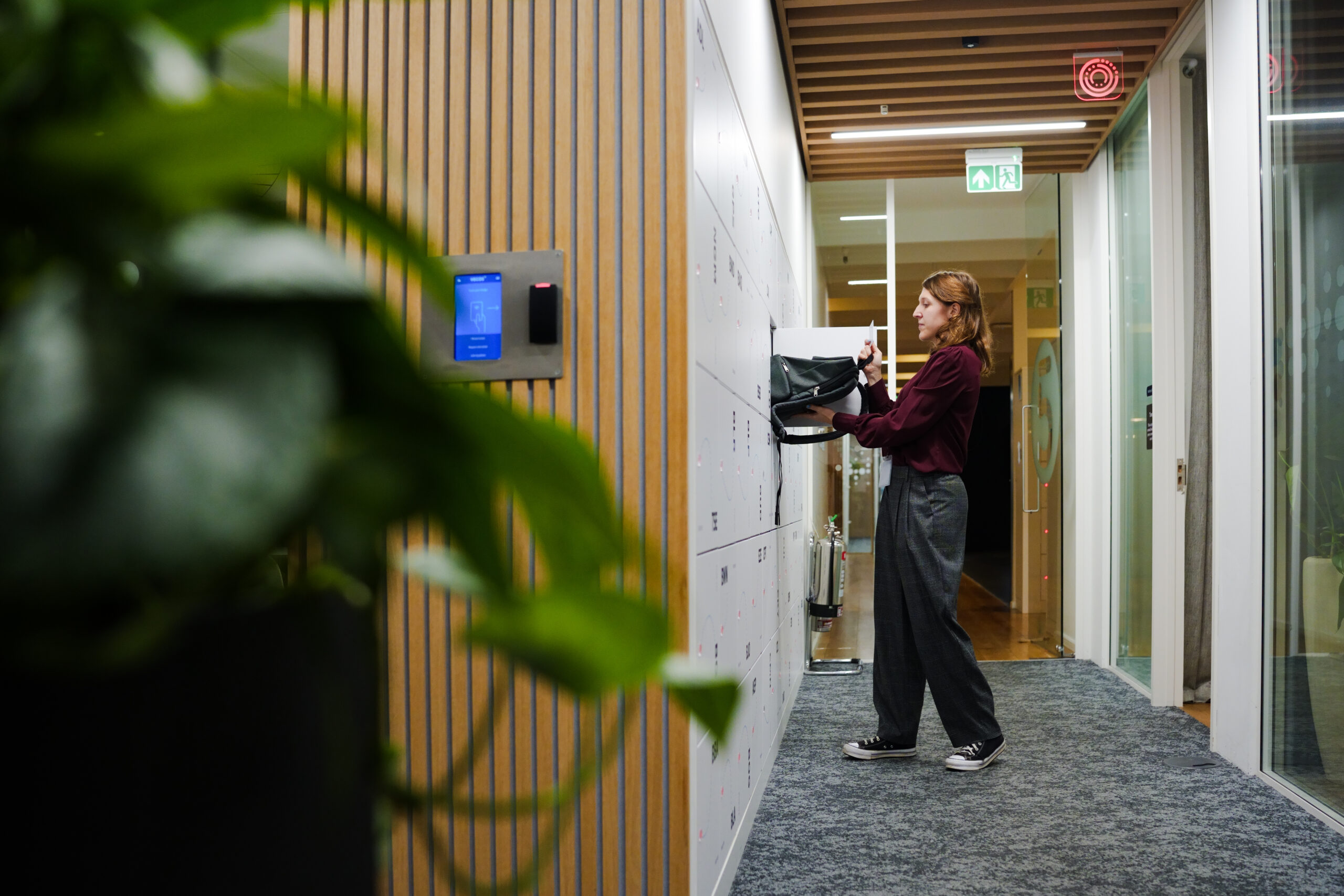
As businesses continue to pursue ambitious Environmental, Social and Governance (ESG) goals, sustainability has become a key consideration in workplace design. While energy-efficient lighting and occupancy sensors often receive the most attention, smart lockers can also have a significant impact on reducing waste, improving space efficiency and lowering carbon emissions.
Smart lockers are no longer simply a secure place to store personal belongings. They have become an essential part of the modern workplace ecosystem, helping organisations make better use of their office space, support hybrid working and collect valuable workplace data that drives more sustainable decision-making.
Whether you’re redesigning your office, embracing hybrid working or looking to reduce your environmental impact, investing in connected lockers can deliver measurable benefits for both your business and the planet.
The Link between Hybrid Working and Sustainability
Hybrid working has fundamentally changed how offices are used. According to the Chartered Institute of Personnel and Development (CIPD) and Remit Consulting, 74% of organisations now support hybrid working, while average office occupancy is approximately 37% across the working week, with Tuesday to Thursday remaining the busiest days.
Despite these changing occupancy levels, many organisations still allocate permanent desks and fixed storage for every employee. As a result, valuable office space often sits empty for much of the week, increasing operational costs and unnecessary energy consumption.
To create truly sustainable workplaces, organisations need flexible infrastructure that adapts to changing occupancy levels rather than assuming every employee is in the office every day. This is where smart lockers make a measurable difference.
Furthermore, when combined with desk booking systems and other workplace technologies, smart storage solutions enable organisations to create workplaces that respond to actual demand rather than assumptions.
Smarter Storage means Less Wasted Space
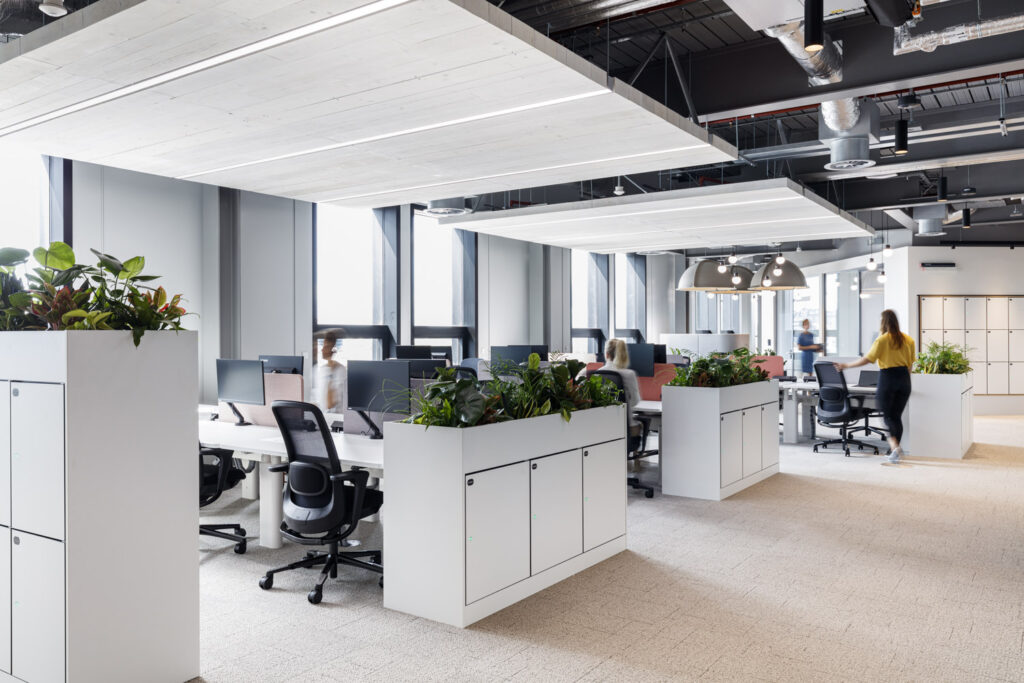
Traditional office storage was designed for employees with permanently assigned desks. Fixed pedestal drawers and one-to-one locker allocations made sense when everyone worked in the office every day, but today’s workplaces require much greater flexibility.
Smart lockers enable organisations to move from one-to-one storage allocation towards a dynamic, shared storage model. Employees simply reserve a locker when they need one, allowing many more people to share fewer lockers without compromising convenience.
Research presented in the Global Workplace Flexibility Index found that smart locker systems can reduce storage requirements by approximately 40%, allowing organisations to reclaim valuable office space without reducing employee convenience.
Reducing the number of lockers required delivers several sustainability benefits, including:
- Less manufacturing resources
- Fewer raw materials consumed
- Reduced embodied carbon
- Lower fit-out and installation costs
- More adaptable office layouts
Rather than installing additional storage as headcount grows, organisations can maximise the use of existing storage through intelligent allocation policies and locker management.
Smart Lockers help Reduce Office Footprints
One of the biggest sustainability benefits of connected lockers is their ability to support more efficient office layouts.
In a hybrid workplace, employees may not need a dedicated desk, but they still expect somewhere secure to store laptops, bags, coats and personal belongings while they’re in the office.
Without reliable, flexible storage solutions, many hybrid working strategies struggle to succeed.
Smart lockers provide employees with secure storage only when they need it, making it easier for organisations to reduce desk numbers and optimise their office space.
For example, an organisation with 2,000 desks could reduce to 1,200 desks, saving around 9,600 square metres of office space. Based on average commercial real estate costs, this could generate annual savings of approximately £3.8 million, while significantly reducing the energy required to heat, cool and operate the building.
Smaller office footprints also contribute to:
- Lower electricity consumption
- Reduced heating and cooling demand
- Lower operational carbon emissions
- More efficient use of real estate
How Data Prevents Unnecessary Waste
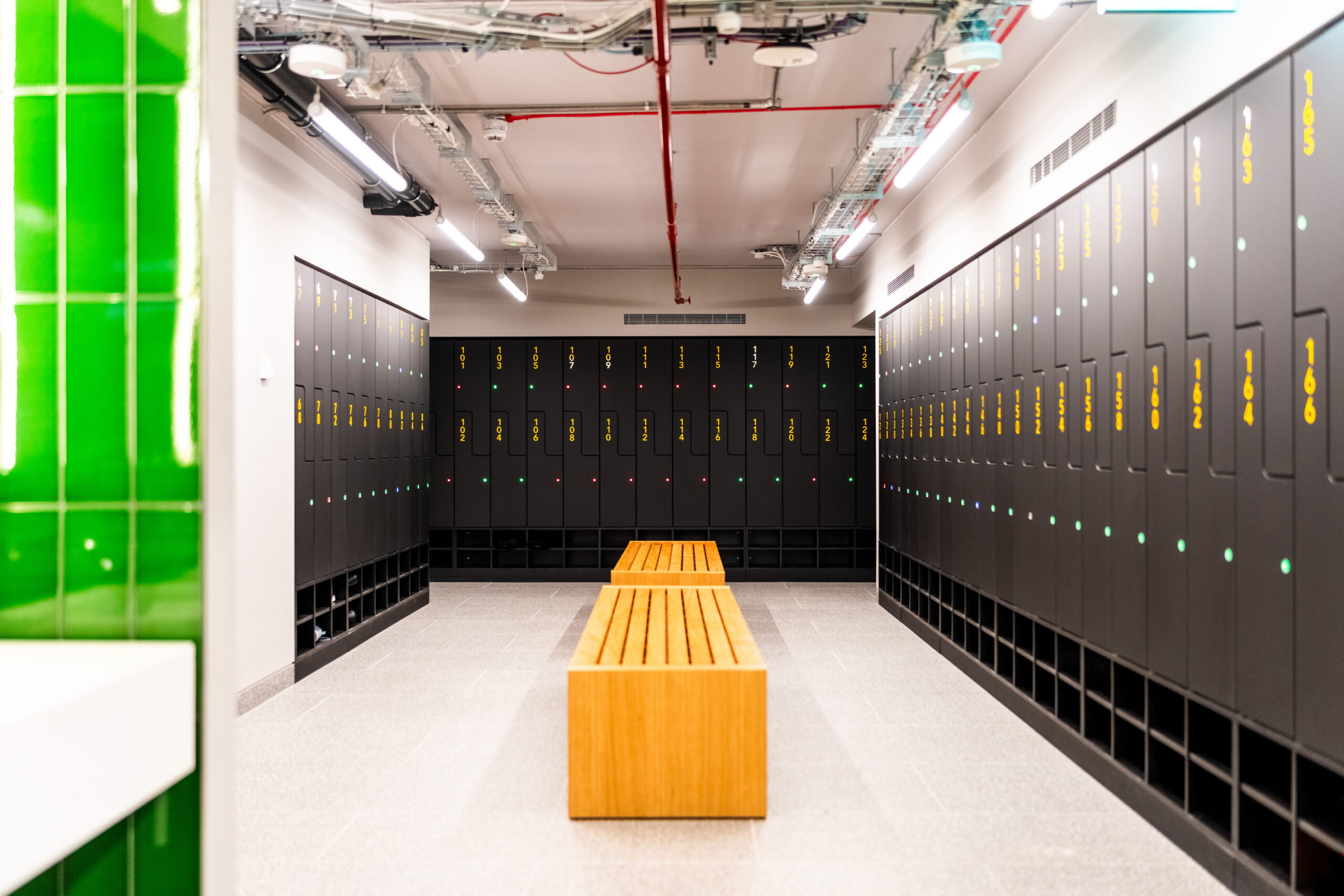
Unlike traditional storage, smart lockers provide valuable workplace data that helps organisations continuously improve how they use their office space.
The Global Workplace Flexibility Index analysed data from:
- 1.3 million smart lockers
- Billions of anonymised locker interactions
- 3,000 workplace teams
- 62 countries
- 9 industries
- 150 workplace leaders
This large dataset gives organisations genuine insight into how employees use storage, allowing facilities managers to make informed decisions based on real behaviour rather than relying on assumptions.
Instead of overestimating demand, organisations can allocate lockers based on real usage patterns, helping avoid unnecessary investment in additional storage that may never be used.
Data-driven workplace planning leads to better long-term sustainability because businesses purchase only what they genuinely need and reduce unnecessary investment in unused space and storage.
Employees Don’t All Use Lockers the Same Way
Another important finding is that storage behaviour varies significantly between employees.
Across the global dataset, five distinct workplace personas emerged:
- Backpack Believers
- Day Droppers
- Overnight Owners
- Agile Archivers
- Neighbourhood Nesters
Interestingly, 37% of employees didn’t use a locker at all over a three-month period, while only 17% used lockers for a single day, 11% used them for several days, 5% used them over multiple weeks, and 30% used the same locker for months.
These findings demonstrate why fixed locker allocations are inefficient. Smart lockers allow organisations to match storage provision to actual demand instead of allocating one locker per employee, reducing both wasted space and unnecessary expenditure.
With traditional storage, organisations often provide permanent lockers for everyone, even though many employees rarely use them.
Digital lockers adapt to these different usage patterns automatically, ensuring storage is available when needed without leaving large numbers of lockers sitting empty.
Eliminating Abandoned Lockers
One of the biggest hidden sources of workplace waste is abandoned lockers.
Many organisations operate unmanaged locker systems where employees claim lockers indefinitely without actively using them.
The research found that 53% of claimed lockers in uncontrolled storage environments are abandoned, sitting empty for weeks while remaining unavailable to other users.
This creates artificial shortages that often lead organisations to purchase additional lockers that may never actually be needed.
Smart locker software solves this problem through intelligent booking policies, automatic expiry periods and usage reminders.
In fact, research has found that 94% of employees respond positively to locker usage nudges, helping organisations recover unused storage and improve availability without installing more lockers.
Making better use of existing resources is one of the simplest ways to improve workplace sustainability.
Supporting Multiple Workplace Functions
Smart lockers are also far more versatile than traditional storage.
Global data identified seven common workplace use cases:
- Personal storage
- Visitor storage
- Team storage
- Handover lockers
- End-of-trip facilities
- IT asset storage
- Parcel collection
Most organisations use 4.6 of these seven applications, while 87% of all locker interactions relate to personal storage.
Because a single smart locker system can support multiple functions, businesses avoid purchasing separate storage solutions for different departments.
This reduces material usage, simplifies workplace management and extends the value of every installation.
Part of a Smarter Workplace Ecosystem
Smart lockers deliver the greatest sustainability benefits when integrated with other workplace technologies.
Alongside desk booking systems, occupancy sensors, smart lighting and workplace analytics, they provide valuable operational intelligence that helps organisations optimise their buildings.
For example, desk booking software can forecast future occupancy, while occupancy sensors monitor real-time usage. Connected lockers complement this by revealing storage demand, allowing organisations to make evidence-based decisions about space allocation.
Together, these technologies help organisations:
- Eliminate unnecessary energy use
- Reduce over-provisioned office space
- Improve employee experience
- Support long-term ESG objectives
- Make evidence-based decisions
Rather than relying on fixed layouts and making decisions based on assumptions, businesses can continually adapt their workplace using real data.
Sustainability in Action: GSK’s New Global Headquarters
One example of smart storage supporting workplace sustainability is our project for GSK’s new global headquarters in central London. Designed to create one of the world’s healthiest workplaces, the building places sustainability, flexibility and employee wellbeing at the heart of its design, achieving a BREEAM Outstanding rating.
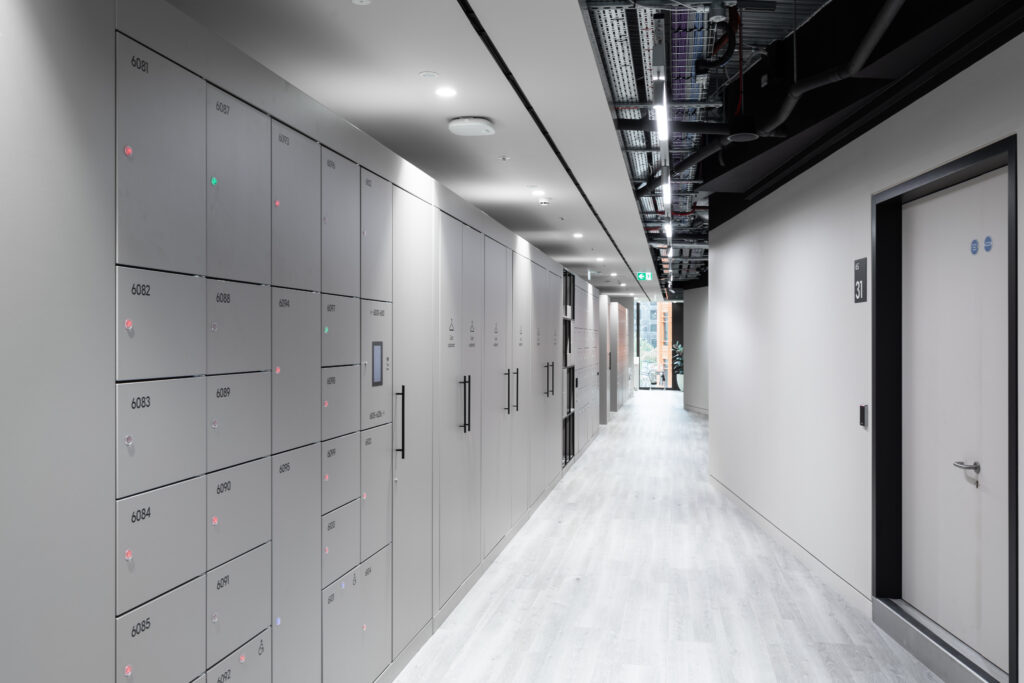
Working across seven floors and the basement, we delivered over 1,100 Simplicity smart lockers, bespoke storage cupboards and mobile Plexus units that were seamlessly integrated into the building’s architecture. Rather than treating storage as an afterthought, every solution was designed to maximise available space, support hybrid working and complement the overall workplace aesthetic.
By combining intelligent locker management with flexible storage solutions, GSK created an adaptable environment that adapts to changing occupancy levels while providing employees with an intuitive storage experience. It’s a great example of how thoughtful workplace design can support both sustainability goals and enhance the everyday employee experience.
A Smarter Route to Workplace Sustainability
Creating a sustainable workplace isn’t just about reducing energy consumption. It’s about making better use of every resource your organisation already has.
Smart lockers help organisations achieve this by reducing wasted space, enabling smaller office footprints, preventing unnecessary storage purchases and providing the data needed for continuous workplace optimisation.
As businesses continue to rethink how workplaces operate, intelligent lockers have become an essential part of modern office design. They don’t just provide storage – they help create workplaces that are more adaptable, efficient and environmentally responsible.
Smart lockers transform storage from a static piece of furniture into an active contributor to lower carbon emissions, reduced operational costs and greater employee experience. They represent a practical investment that delivers long-term environmental and commercial benefits.
Contact Us
Ready to make your workplace more sustainable?
Whether you’re planning a new office fit-out, transitioning to hybrid working or looking to optimise your existing workplace, our team can help you find the right smart locker solution for your business.
Get in touch with our team on 01621 855053 or email info@yourworkspace.com to discuss your project, request expert advice or arrange a showroom visit to see our smart lockers in action.
We’d be happy to help you create a smarter, more sustainable workplace.