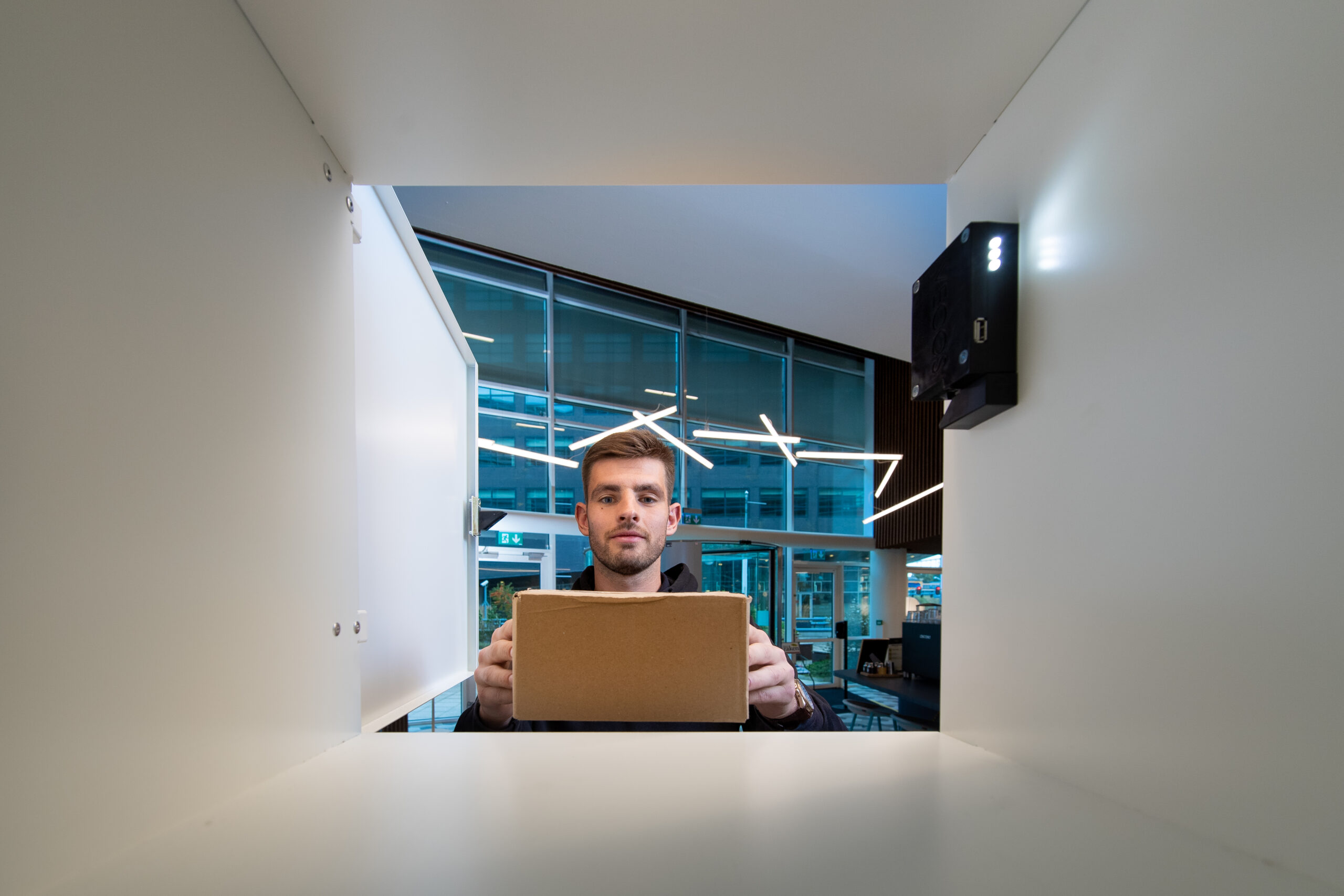
As workplace deliveries continue to increase, managing office parcels has become a growing challenge for facilities and workplace teams. Reception desks can quickly become overwhelmed, while employees expect a convenient and secure way to collect packages around increasingly flexible working patterns.
Smart locker systems provide a technology-led solution. By combining secure storage, automated notifications and self-service collection, they reduce the pressure on reception teams while giving employees greater flexibility over when and how they collect their parcels.
In this guide, we explore how smart locker systems work for office parcel management, the key features to look for, the benefits they can deliver and how to choose the right solution for your workplace. Whether you are planning a new office, refurbishing an existing space or looking to improve your current parcel management process, smart lockers can help create a more efficient and employee-friendly workplace.
What is a Smart Locker System for Office Parcel Management?
A smart locker system for office parcel management is a digitally connected storage solution that automates how packages are received, stored and collected in corporate environments. These systems replace manual mailroom processes with secure, self-service technology that benefits both facilities teams and employees.
When a parcel arrives, the delivery person places it in an available compartment using a touchscreen interface. The system then automatically notifies the recipient through SMS, email or a mobile app. The employee retrieves their package using secure authentication such as a unique PIN, QR code or existing building access credentials.
Every interaction is logged in a centralised platform, creating an audit trail that records who deposited and collected each item. This visibility helps facilities managers maintain accountability and resolve delivery queries quickly.
Why are Smart Locker Systems Essential for Modern Offices?
The growth of e-commerce has changed how parcels flow into corporate offices. Employees increasingly have personal purchases delivered to work alongside business-related mail and equipment, adding to the workload already handled by reception and facilities teams.
Hybrid working has made the process more complex. Employees may only be in the office on certain days, meaning packages can remain at reception for extended periods. Staff may also need to accommodate collections outside traditional reception hours.
Smart locker systems address these challenges by providing secure, self-service collection. Employees can access their parcels when they are on-site without relying on reception staff to locate and hand over individual deliveries. Automated notifications also provide immediate confirmation that a package has arrived.
How do Smart Locker Systems Work for Parcel Deliveries?
While features vary between providers, most smart locker systems follow a straightforward process.
Step 1: Package Deposit
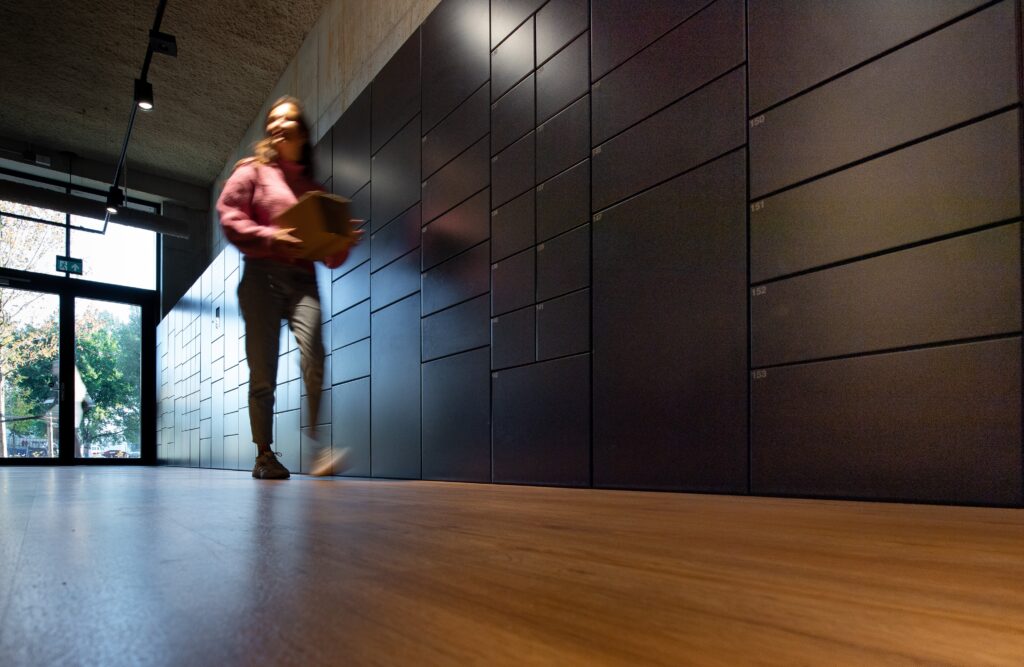
A courier or mailroom staff member approaches the locker bank and uses the touchscreen interface to begin a deposit. They scan the package barcode or enter recipient details manually. The system identifies an appropriately sized compartment, unlocks the door and prompts the courier to place the item inside.
Step 2: Automated Notification
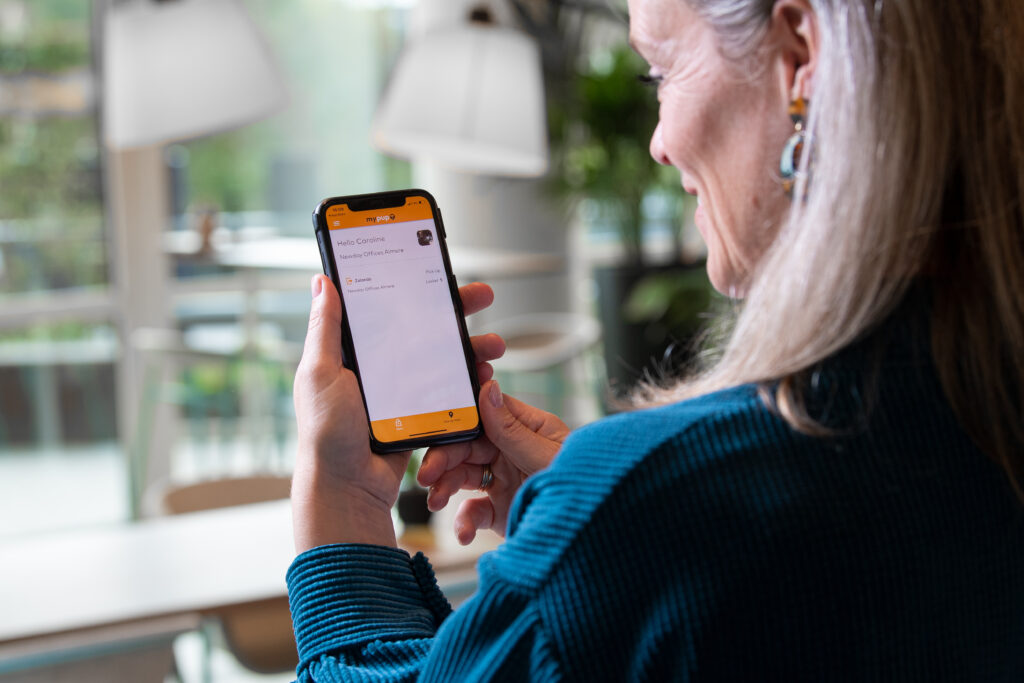
Once the door closes, the system sends an instant notification to the recipient. This typically includes a unique collection PIN or QR code along with the locker location. Depending on the platform, notifications may be delivered by email, SMS or a mobile app.
Step 3: Secure Collection
The recipient visits the locker and authenticates using their PIN, QR code, building access credential or smartphone app. The relevant compartment unlocks automatically, allowing them to retrieve the package.
Step 4: Data Logging and Reporting
Each transaction is recorded with timestamps, user identification and compartment details. Facilities managers can access this information through a web-based dashboard to monitor usage, identify peak periods and support operational planning.
What Features Should Facilities Managers Look For?
The right system should reflect your workplace requirements, delivery volumes and existing technology infrastructure.
Integration with Existing Building Systems
Look for systems that can integrate with existing access control, allowing employees to use the same credentials for lockers and building entry.
Platforms that connect with wider IT infrastructure can also enable centralised management across multiple floors, buildings or locations from a single dashboard.
Flexible Compartment Configurations
Parcels arrive in different shapes and sizes, so a useful locker bank should include a mixture of compartment sizes. This allows the system to accommodate everything from envelopes and small packages to larger equipment.
Real-Time Analytics and Reporting
Usage data can help facilities teams understand how the lockers are performing. Useful metrics include occupancy rates, average dwell time, peak delivery periods and compartment utilisation by size.
These insights support capacity planning and can help identify whether the current configuration is meeting demand.
User-Friendly Interface
Both couriers and employees need to be able to use the system with minimal instruction. Intuitive touchscreen interfaces and clear prompts simplify deposits and collections, while mobile app functionality can provide additional convenience.
What are the Core Benefits for Corporate Offices?
Smart locker systems can improve parcel management across several areas of workplace operations.
Reduced Administrative Burden
Manual parcel handling can consume considerable staff time. Reception teams may need to log deliveries, contact recipients, store packages securely and manage collections.
Automating these tasks allows staff to spend more time on higher-value activities such as visitor management, workplace hospitality and facilities support.
Corporate offices that deploy automated parcel lockers may save between 5 and 15 hours of staff time each week, depending on delivery volumes and existing processes.
Enhanced Security and Accountability
Packages stored in locked compartments with authenticated access provide a more controlled environment than open mailrooms or reception areas.
An electronic audit trail also records deposits and collections, giving facilities teams greater visibility and making it easier to investigate missing or delayed deliveries.
Improved Employee Experience
Employees receive notifications when packages arrive and can collect them without waiting for reception staff. This is particularly useful for hybrid workers who may have limited time on-site.
Space Optimisation
Traditional mailrooms and reception storage can require significant floor space, particularly in offices with high delivery volumes.
Smart lockers make efficient use of vertical space, while dynamic allocation means compartments can be reused as soon as packages are collected. A mixture of compartment sizes can also help maximise the available footprint.
How to Determine the Right Locker-to-Employee Ratio
The number of parcel lockers required depends on your workplace rather than simply the number of employees.
Start by analysing current delivery volumes. Consider how many packages arrive each day, their typical sizes and how quickly employees collect them. If parcels regularly remain uncollected for several days, more capacity will be required than in a workplace where collections happen within hours.
Your workforce profile is also important. A building with 500 employees attending every day will generate different demand from one with 500 employees where only 200 are typically on-site under a hybrid working model.
Peak attendance and delivery days should also be considered when calculating capacity.
Your Workspace’s workplace consultants can help organisations assess these variables and recommend an appropriate configuration based on workplace requirements and experience across multiple sectors.
What Implementation Steps Should You Follow?
A successful smart locker rollout requires planning across several areas.
Assess Current State and Future Needs
Document your existing parcel management process and identify the main pain points. Gather data on delivery volumes, peak periods and collection patterns.
It is also worth considering how your workplace could change over the next three to five years, including potential changes to hybrid working policies, headcount or office capacity.
Choose Location and Design
Work with your interior designer or workplace strategist to identify suitable locker locations. Areas near building entrances or lift lobbies can be convenient, but accessibility, circulation and congestion should also be considered.
Modern smart lockers can be designed to complement the wider workplace through different sizes, finishes and modular configurations.
Plan System Integration
Engage your IT team early to establish network requirements and integration opportunities. Confirm compatibility with existing access control technology, whether this uses RFID, mobile credentials or other authentication methods.
Develop User Communication and Training
Provide employees with clear guidance explaining how the system works. Although modern locker interfaces are designed to be intuitive, proactive communication can help accelerate adoption and reduce support requests.
Monitor and Optimise
Once the system is operational, review usage data regularly. Analytics can reveal whether particular compartment sizes are consistently in demand, whether packages accumulate at certain times and whether additional capacity may eventually be required.
How do Smart Lockers Support Hybrid Working Models?
Hybrid working has changed how employees interact with workplace services. People may attend the office on different days each week, so services need to accommodate varying schedules.
Smart parcel lockers provide this flexibility by allowing employees to receive a delivery at the office and collect it when they are next on-site. For example, an employee working from home on Tuesday can receive a notification that their package has arrived and collect it on Thursday.
This removes the need for employees to coordinate collections around reception opening hours and reduces the amount of manual handling required from workplace teams.
Global consulting firm McKinsey & Company deployed Your Workspace’s Simplicity smart lockers as part of a workspace designed to support both collaboration and individual needs. Automated IT equipment distribution and parcel management formed part of a more flexible employee experience.
What Should You Know About Security and Data Protection?
Security needs to be considered from both a physical and digital perspective.
Physical Security
Quality locker systems use robust construction and secure locking mechanisms. Individual compartments should only open for authenticated users with the correct credentials.
Some systems can also provide activity alerts, helping administrators identify unusual activity or potential security issues.
Data Security
Smart locker management platforms can process personal information such as employee names, contact details and usage history.
When evaluating a solution, confirm that it complies with GDPR and uses appropriate security measures, including encrypted data transmission, secure administrator authentication and clearly defined data retention policies.
Your Workspace’s smart parcel lockers maintain GDPR compliance with encrypted data protection and audit trails that provide visibility over locker activity.
How can Smart Lockers Support the Wider Workplace Technology Strategy?
Smart lockers can form part of a wider connected workplace ecosystem rather than operating as an isolated technology.
For example, locker analytics can provide useful insight into workplace activity. If parcel volumes consistently increase on particular days, this may provide another indication of changing attendance patterns that could inform facilities planning.
Smart lockers can also integrate with other workplace technologies to create a more seamless employee experience. Connecting lockers with access control, mobile applications or workplace management platforms can reduce the number of separate systems employees need to interact with.
What Use Cases Extend Beyond Personal Parcel Delivery?
Parcel management is just one application for smart locker technology. The same infrastructure can support several other workplace requirements.
IT Equipment Distribution
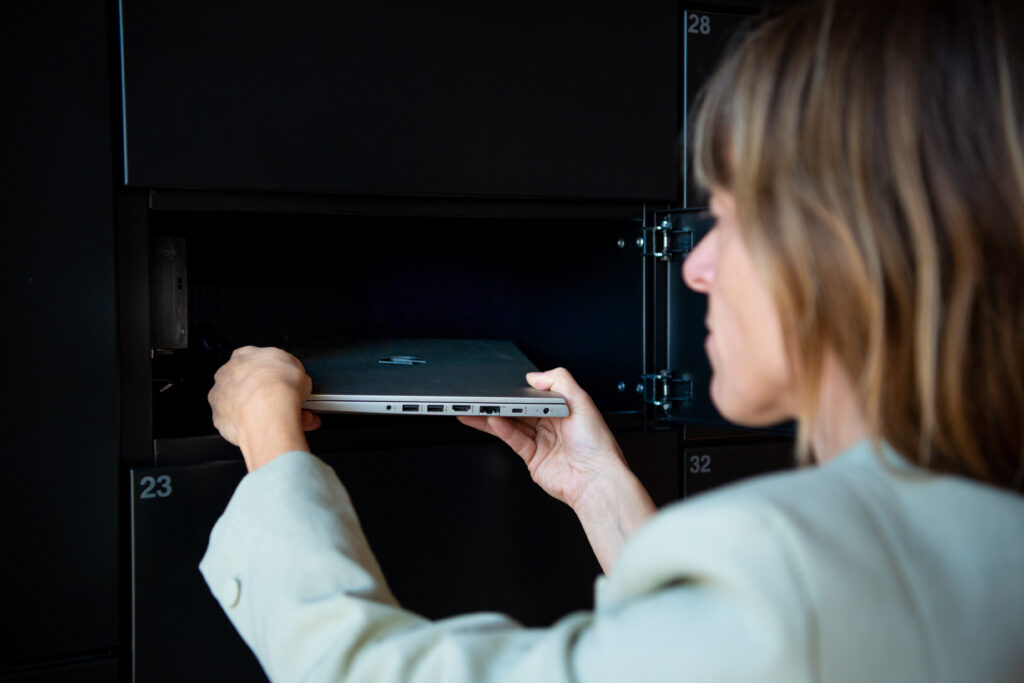
IT teams can use dedicated lockers for equipment collection and returns. An employee needing a laptop charger, monitor or other device can collect it from a designated compartment without waiting for an IT team member.
Returns can follow the same self-service process, with transactions recorded automatically for asset management.
Visitor and Contractor Management
Temporary locker access can be provided to visitors or contractors during their time on-site. This provides secure storage without requiring permanent locker allocation or manual handover.
Internal Mail and Document Transfer
Secure lockers can also facilitate the transfer of confidential documents between departments or locations. The sender deposits the item and the recipient collects it using their credentials, with the transaction recorded in the system.
What Questions Should You Ask Potential Suppliers?
When evaluating smart locker providers, consider the following areas:
Integration: Can the system connect with your existing building access control? Which authentication methods are supported? Is an API available for integration with other workplace applications?
Management: Is the platform web-based? Can multiple sites be managed from a single dashboard? What analytics and reporting capabilities are available?
Support: What happens if a locker malfunctions? What technical support is available? Can issues be resolved remotely or will they require an engineer visit?
Scalability: Can additional lockers be added as requirements change? Are modular expansion options available?
These questions can help you assess not only the functionality of a system, but also how well it will support your workplace as it evolves.
Making Smart Locker Investment Decisions for Your Office
Smart locker systems provide a practical way to modernise office parcel management while reducing the administrative demands placed on reception and facilities teams.
The most suitable solution will depend on your delivery volumes, workforce profile, available space, technology infrastructure and future requirements. Assessing these factors before selecting a system will help ensure you invest in a configuration that provides long-term value.
Your Workspace has supported organisations across multiple sectors with smart storage solutions designed around their workplace strategies. Its UK-manufactured Simplicity smart lockers serve over 1.5 million users worldwide, from global consulting firms to flexible workspace operators.
Whether you are planning a new office, refurbishing an existing space or looking to modernise your parcel management process, smart locker technology can provide a secure, flexible and scalable solution for the demands of 2026 and beyond.
Contact Us
Looking for a smarter way to manage office parcels and workplace deliveries? Your Workspace can help you assess your requirements, from delivery volumes and locker capacity to location, compartment configuration and technology integration.
Whether you are introducing smart parcel lockers for the first time, upgrading an existing system or integrating lockers into a wider workplace technology strategy, our team can recommend a solution designed around the way your organisation works.
Get in touch with us today on 01621 855053 or email info@yourworkspace.com to discuss your project and find the right solution for your workplace.